
Friday, 2 August 2013

Thursday, 1 August 2013


Tuesday, 30 July 2013

Sony launches Xperia Z Ultra - World's biggest phone!
Following the current trend "my smartphone is bigger than yours", Sony has launched a freakishly-big Xperia Z Ultra. It's basically an overgrown Xperia Z with a 6.4" screen having 1080x1920 pixels. It's also said to come with Sony's Triluminos tech that supposedly offers better colour reproduction compared to normal LCD screens. Then, there's X-Reality for mobile feature, which delivers sharp videos by reducing noise prior up-scaling. Similar to the Xperia Z, the new Ultra is also dust and water resistant. Provided that all ports and covers are firmly closed, the phone can be kept under 1.50 metres of water for up to 30 minutes.
The Xperia Z Ultra packs in a 2.2 GHz quad-core Snapdragon 800 processor. For photography, there’s an 8 megapixel camera (Exmor RS sensor). Apart from that, it offers a 2 megapixel front-facing camera, 2 GB of RAM, 16 GB of internal storage, microSD card slot, and 3000 mAh battery.
The Xperia Z Ultra is the biggest phone to come from Sony's stable. The Xperia Z Ultra may not fit into your pocket, but can burn a Rs 47,000 hole in it. The handset will come in White, Purple, and Black, and will start retailing from the end of this week.


BMW unveils electric car i3, eyes Indian market
German luxury car maker BMW Group today launched the first production series of its all-electric 'i3' city car simultaneously in three continents -- Asia, Europe and the US.
The company said it sees huge potential in India for the BMW i3 and is in talks with the government on the issue of sustainable mobility.
The i3 would go on sale in London by the end of this year and in Beijing and New York from the beginning of 2014.
While it will be priced 35,000 euros in Europe, the i3 will cost USD 41,350 in the US. The company has not yet decided price for the Chinese market.
Asked if the company has plans to launch the i3 in India, the Group's Board member for production Harald Krueger said: "I was in New Delhi last week. We have discussed about this with the concerned minister. We will definitely come to India as we see there is a potential market. But we cannot say when (i3 will be launched in India)."
The infrastructure in India for such electric vehicles has to be developed first, he added.
The four-seater i3, with its zero emissions all-electric engine and a range of 130-300 kilometres, is designed mainly for city use.
Commenting on the launch, BMW AG Norbert Reithofer said: "It is a milestone in motor industry. BMW i3 is a revolutionary car for sustainable mobility. This day will be remembered in future."
The car is made of carbon fibre and reinforced plastics on a light aluminium chassis to reduce weight.
"This is for the first time carbon fibre has been used for mass production in BMW. It is a technology breakthrough. Use of carbon fibre is 50 per cent lighter than steel. It makes it (car) safe," Krueger said.
The car weighs 1,200 kg, while battery about 230 kgs. More than 80 per cent of the vehicle parts can be recycled. It can be charged at home from conventional domestic plug socket or have a BMWi wallbox installed to charge battery in around six hours. It can also be charged at public stations.
The i3 will also have the option of a range extender which uses a two-cylinder petrol engine with nine litre fuel tank to maintain exclusively the charge of the lithium-ion battery, thereby increasing the range of the vehicle to around 300 kilometre in day-to-day driving.
The BMW created a separate 'i' sub-brand to market electric vehicles. The Group has invested more than one billion euros in developing BMW i3, the Group's Board member for Finance Friedrich Eichiner said.
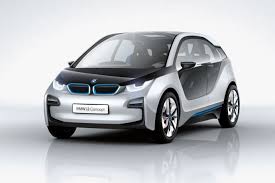


The company said it sees huge potential in India for the BMW i3 and is in talks with the government on the issue of sustainable mobility.
The i3 would go on sale in London by the end of this year and in Beijing and New York from the beginning of 2014.
Asked if the company has plans to launch the i3 in India, the Group's Board member for production Harald Krueger said: "I was in New Delhi last week. We have discussed about this with the concerned minister. We will definitely come to India as we see there is a potential market. But we cannot say when (i3 will be launched in India)."
The infrastructure in India for such electric vehicles has to be developed first, he added.
The four-seater i3, with its zero emissions all-electric engine and a range of 130-300 kilometres, is designed mainly for city use.
Commenting on the launch, BMW AG Norbert Reithofer said: "It is a milestone in motor industry. BMW i3 is a revolutionary car for sustainable mobility. This day will be remembered in future."
The car is made of carbon fibre and reinforced plastics on a light aluminium chassis to reduce weight.
"This is for the first time carbon fibre has been used for mass production in BMW. It is a technology breakthrough. Use of carbon fibre is 50 per cent lighter than steel. It makes it (car) safe," Krueger said.
The car weighs 1,200 kg, while battery about 230 kgs. More than 80 per cent of the vehicle parts can be recycled. It can be charged at home from conventional domestic plug socket or have a BMWi wallbox installed to charge battery in around six hours. It can also be charged at public stations.
The i3 will also have the option of a range extender which uses a two-cylinder petrol engine with nine litre fuel tank to maintain exclusively the charge of the lithium-ion battery, thereby increasing the range of the vehicle to around 300 kilometre in day-to-day driving.
The BMW created a separate 'i' sub-brand to market electric vehicles. The Group has invested more than one billion euros in developing BMW i3, the Group's Board member for Finance Friedrich Eichiner said.

Subscribe to:
Comments (Atom)